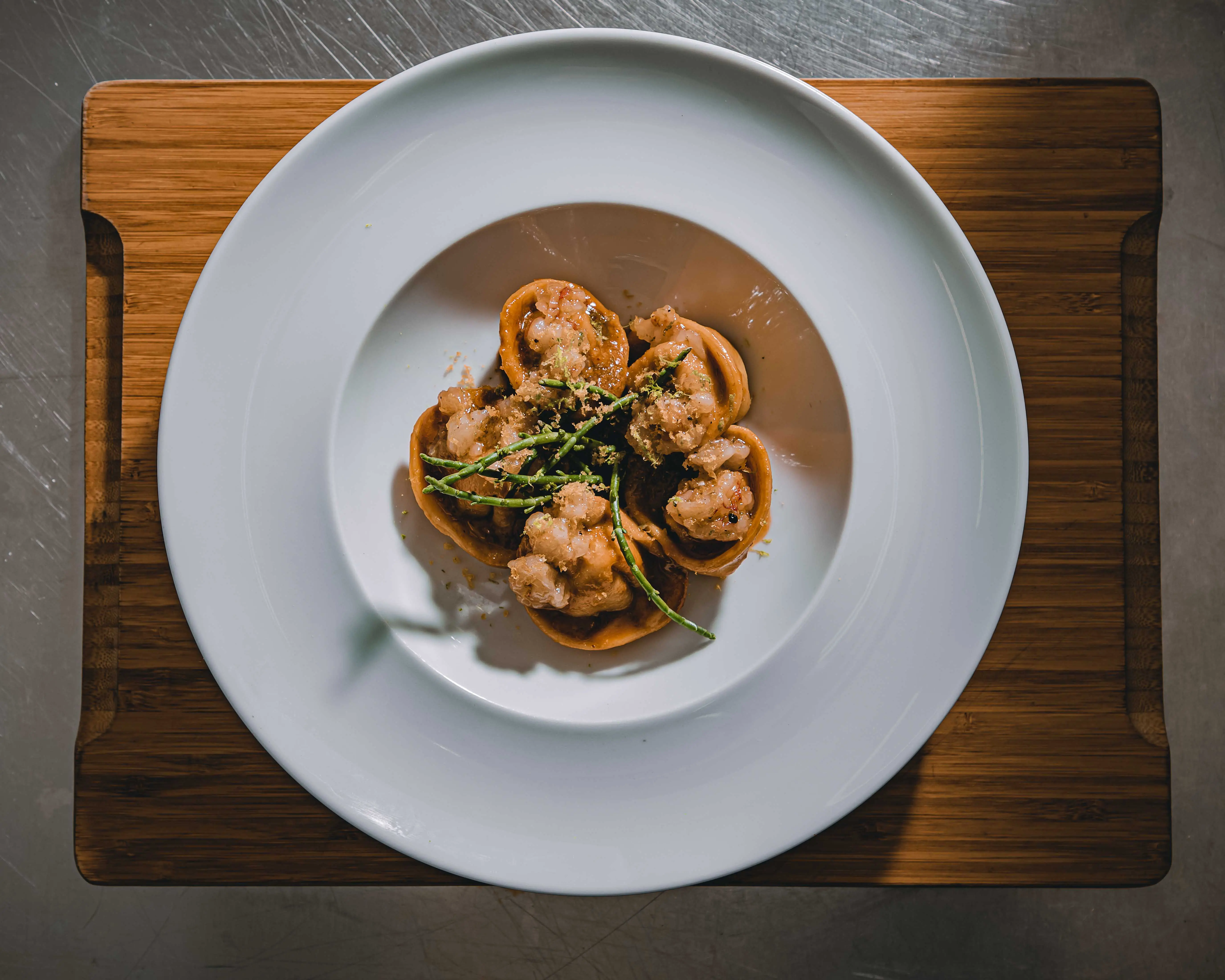
Cappelletti, Spring Pea & Brown Butter
Hand-folded cappelletti arrives in a clear broth with spring peas and brown butter. A quiet first course that gives the table time to settle.
Seven dishes. One evening. A menu shaped by what is ready.

A menu begins with attention to what is ready, not with a fixed list. Shape, sweetness, bitterness, and weight change from one ingredient to the next. The kitchen responds by adjusting the plate until each element feels clear enough to stand on its own.
One evening may open with warm bread and cultured butter. Another may begin with something green, sharp, and cold. The first course is chosen for the way it changes the room, giving conversation time to settle before deeper flavours arrive.
Acidity can clear the palate. Smoke can slow it down. A crisp leaf, a clear broth, or a spoonful of brown butter can shift the direction of the meal without asking for attention. Each dish prepares the senses for the next.
The centre of the meal carries more depth, but not more noise. Pasta, vegetables, shellfish, or the day’s catch are given enough space to hold texture and warmth. Sauces remain measured, and garnishes appear only when they change the way a bite is understood.
A dish can return in another form when the ingredients ask for it. The title may stay familiar while the balance changes completely. This is why the menu reads as a record of decisions rather than a catalogue that must remain the same.
What remains constant is the rhythm: a beginning that opens the table, a middle that gathers its attention, and a close that leaves room for the evening to continue. The following dishes are Demo examples of how that rhythm can be expressed.
The menu is only the visible part of a longer conversation.
The centre of the meal carries more weight, but never asks for a verdict. It is where flavour lingers long enough for the room to notice it.